Contact Us
Sea freight services to and from Ireland
Connect your Irish supply chain with global markets through flexible FCL, LCL and specialist ocean freight services.
Woodland Group provides sea freight in Ireland for businesses importing and exporting across Asia, North America, Europe, the UK and wider international markets. From carrier selection and routing to customs requirements and final delivery, our experienced Ireland team coordinates the wider journey around your cargo.
Whether you're shipping a container to Ireland, moving smaller LCL consignments or managing regular international imports, we'll assess the available services around your priorities.

International sea freight with local expertise in Ireland
Getting cargo to Ireland isn't simply about the main ocean crossing.
Many international shipments rely on transhipment and feeder connections before reaching an Irish port. Port congestion, feeder schedules and additional handling can therefore have a significant effect on when cargo actually becomes available.
Woodland's Ireland team plans around the complete journey. We manage FCL movements through Dublin, Cork and Belfast, with access to alternative UK and international gateways where the route calls for a different approach.
For LCL cargo, our Woodland-controlled consolidation model provides another option. Suitable Asia and US shipments move through Woodland's UK network before being transferred overnight to Dublin, reducing reliance on congested European hub and feeder routings.
Accredited where it counts for Irish sea freight


Ocean freight services in Ireland for different shipping requirements
The right service depends on the cargo, volume, origin, destination and required arrival date. Our Ireland team assesses those requirements alongside current carrier schedules and market conditions.
Full Container Load (FCL)
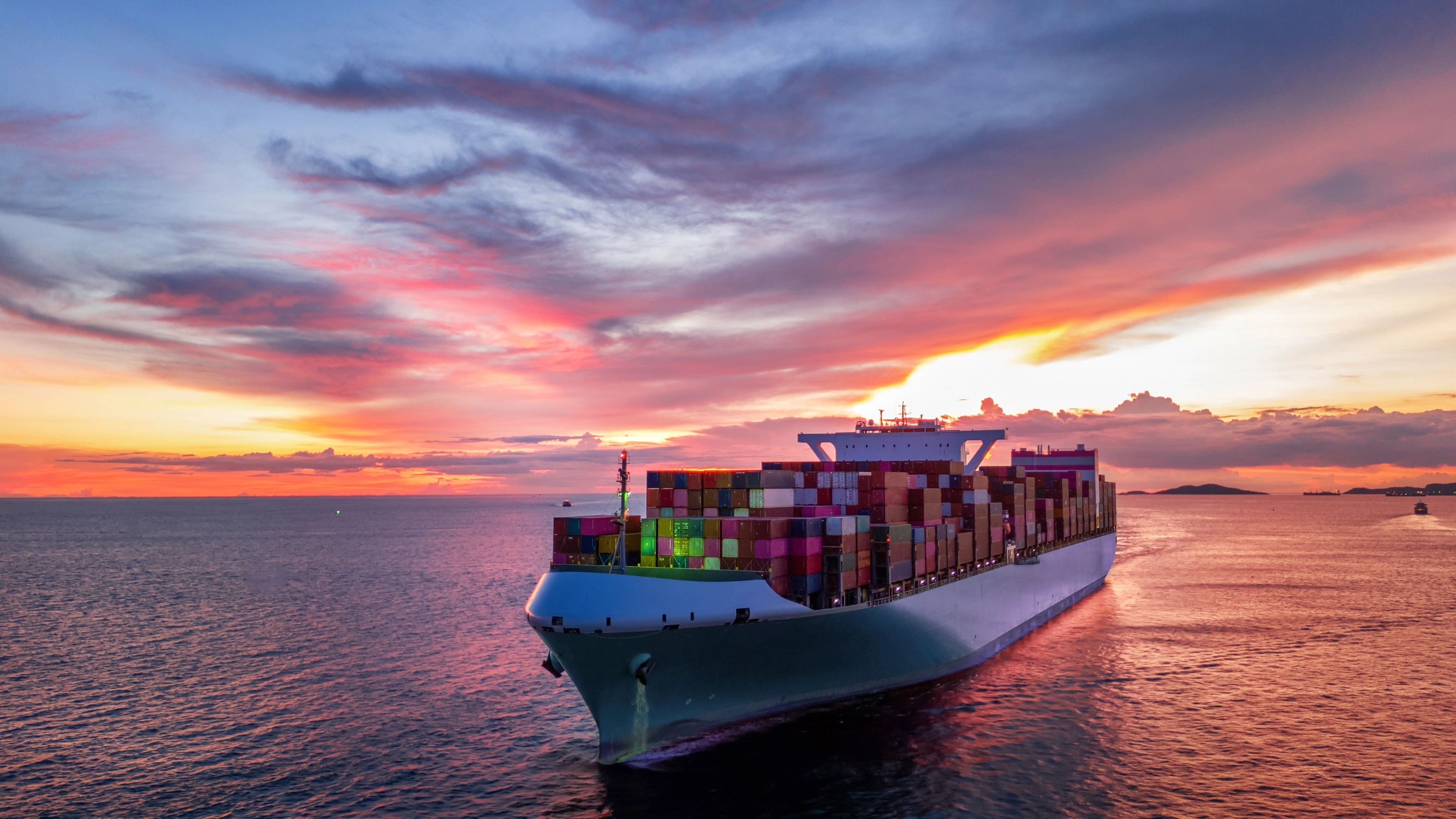
For larger shipments, FCL gives you dedicated container capacity from origin to destination.
Woodland manages FCL imports and exports through Dublin, Cork and Belfast, working across carriers and routes to balance equipment availability, schedule, reliability and cost.
If you're shipping a container to Ireland, our team can coordinate the wider journey from international origin through to customs and onward delivery.
Explore our sea freight service brochure
Download our sea freight brochure for a closer look at Woodland's international ocean freight capabilities, from FCL and LCL to specialist cargo, customs and supply chain visibility.
- Compare our core sea freight services
- Explore our international trade lane capabilities
- Understand how Woodland supports your cargo beyond the port
If you're ready to discuss your sea freight requirements, get a quote below or reach out to one of our specialists to get a detailed breakdown of how Woodland Group can support your business.

Get your sea freight quote
Tell us where your shipment is moving, along with its weight, dimensions and service requirements. Our team will review the details and provide a tailored sea freight quotation, including suitable routing options and estimated transit times.
iBusiness shipments onlyWoodland Group is a B2B logistics provider. We do not handle personal effects, household removals or individual parcels.
Origin, destination and terms
Fields marked * are required.
Select more than one if you would like options compared, for example door to door alongside port to port.
Quote request
Not yet started
OriginNot set
DestinationNot set
TermsNot set
ShippingNot set
HazardousNot set
Pieces—
Gross weight—
Volume—
Ireland sea freight for different supply chains
Product characteristics, handling requirements, seasonality and inventory strategy can all influence how goods should move.
Woodland's Ireland sea freight team regularly handles cargo across consumer and industrial supply chains including:


More options for getting your cargo into and out of Ireland
Irish ports and international gateways
Woodland's main FCL discharge ports in Ireland include Dublin, Cork and Belfast, giving customers options according to the cargo, carrier service and final destination.
Our wider network also enables us to consider routings through UK gateways including Felixstowe, London Gateway, Southampton, Liverpool and Grangemouth where appropriate.
Cross-trade movements can also be managed through international gateways including Antwerp, Rotterdam, the Middle East and South-East Asia.
Having access to different routes matters when congestion, blank sailings, capacity or carrier network changes affect the original plan. Our team can review the options available rather than relying on one fixed gateway.

A more controlled route for LCL imports into Ireland
For LCL cargo, the stages after the main ocean crossing can have a significant effect on when goods become available.
Many conventional services route through European hubs such as Rotterdam or Antwerp before transferring cargo onto feeder vessels bound for Dublin. This can introduce further transhipment, handling, feeder dependency and destination deconsolidation.
For suitable Asia and US LCL cargo, Woodland uses its connected UK and Ireland network differently.
Cargo moves through Woodland's UK consolidations and is de-vanned at a Woodland-controlled UK warehouse before being transferred overnight to Dublin on our express trailer service.
Reducing the number of additional stages gives our teams greater operational control and can help cargo become available sooner in Ireland.

Shipping from China to Ireland
China is one of the most important origin markets for Woodland's Ireland sea freight operation, with significant cargo flows from Ningbo, Yantian, Shanghai and Qingdao.
For businesses shipping from China to Ireland, Woodland provides both FCL and LCL options supported by our established Asia Pacific capabilities.
Our China LCL service moves cargo on the main vessel service to the UK, where it is de-vanned within the Woodland network before onward transfer to Dublin. This avoids an additional European hub and feeder stage for suitable shipments.
It also connects Woodland teams across origin, the UK and Ireland, providing continuity across the journey rather than treating each stage as a separate movement.
Keep Irish customs requirements connected to your freight
Customs preparation starts before cargo reaches Ireland.
Importers need accurate information about the composition and value of their goods and the correct tariff classification rather than relying solely on information supplied by an overseas supplier. Incoterms should also be clearly understood so responsibility for freight, customs, insurance and other stages is established from the outset.
Our teams support the customs processes surrounding international sea freight and help customers understand the information required for clearance.
Changing trade requirements, including CBAM and other commodity-specific regulations, can also require earlier preparation and clearer ownership within the importing business.

Plan around the complete journey into Ireland
Sea freight transit times depend on the origin, carrier, routing and current market conditions. For Ireland, feeder connections and port congestion can also affect when cargo becomes available.
Our team considers the full journey, from cargo readiness and the main ocean transit through to customs, deconsolidation and final delivery, helping customers plan around realistic end-to-end lead times.

Plan ahead for free time, demurrage and detention
The destination journey also needs to account for how long cargo or equipment can remain at the port or terminal. Limited free time, customs delays, documentation issues, congestion and onward transport availability can all create exposure to demurrage or detention charges.
Dublin Port capacity can add another consideration for importers, making it important to understand the arrival process and prepare for clearance and onward movement before the vessel reaches destination.
Our Ireland team helps customers understand these operational requirements and coordinate the next stage of the shipment as early as possible.

Specialist and regulated cargo
Some goods require additional preparation before they can move by sea.
Hazardous cargo requires the appropriate declaration, documentation, packing and carrier approval and may be subject to restricted sailings or additional lead time.
Special equipment, temperature-controlled shipments and out-of-gauge requirements are assessed individually so that the cargo, route and carrier requirements can be considered before booking.

Visibility across your international shipments
Woodland Online brings shipment information together in one place, helping your teams maintain oversight of sea freight moving into and out of Ireland.
Combined with updates from our freight teams, digital visibility helps customers monitor their shipments and respond when ETDs, ETAs or wider market conditions change.

Trusted by Irish importers and exporters
Sea freight between Ireland and key global markets


Ireland & Asia Pacific
Asia is an important market for Woodland Ireland, with established FCL and LCL flows from major manufacturing and sourcing locations across the region. Our largest origins include Ningbo, Yantian, Shanghai, Qingdao and Surabaya, supported by Woodland's established Asia Pacific capabilities.
Learn more

Ireland & USA
Woodland supports FCL and LCL movements between Ireland and the USA, connecting customers with our established US operations and wider North American network. Suitable US LCL cargo can also move through Woodland's UK consolidation network for onward transfer to Dublin.
Learn more

Ireland & UK
Woodland's established operations in Ireland and the UK support closely connected international supply chains across both markets. Our UK network also plays an important role in our Ireland LCL service, providing Woodland-controlled deconsolidation before suitable cargo moves onwards to Dublin.
Learn more

Ireland & Europe
Woodland supports international freight connections between Ireland and mainland Europe alongside wider cross-trade movements. Our network provides routing options through major European gateways, while Turkey is also an important and developing market for Woodland's Ireland operation.
Learn more
Beyond Sea Freight Services
Keep up with developments affecting Ireland's international trade, including ocean freight services, port operations, customs requirements, UK and EU trade, supply chain sustainability and changing conditions across international shipping markets.



Sea freight Ireland FAQs
What sea freight services does Woodland provide in Ireland?
Woodland provides FCL, LCL and buyer consolidation services for businesses importing into and exporting from Ireland.
We can also assess specialist project, out-of-gauge, breakbulk and reefer movements according to the cargo, route and carrier requirements.
Which ports does Woodland use for sea freight in Ireland?
Woodland's main FCL discharge ports in Ireland include Dublin, Cork and Belfast.
Depending on the shipment, our wider network also provides routing options through UK gateways including Felixstowe, London Gateway, Southampton, Liverpool and Grangemouth, alongside European and international gateways.
Can Woodland arrange shipping a container to Ireland?
Yes. Woodland coordinates Full Container Load shipping to Ireland across major international trade lanes.
Our team can assess carrier services, routing, equipment availability and schedules according to your origin, cargo and destination before connecting the ocean movement with customs and onward transport where required.
Does Woodland provide shipping from China to Ireland?
Yes. Woodland provides FCL and LCL sea freight from China to Ireland, with significant cargo flows from Ningbo, Yantian, Shanghai and Qingdao.
For suitable LCL shipments, cargo moves to the UK on the main vessel service before being de-vanned within Woodland's UK network and transferred overnight to Dublin.
How long does shipping from China to Ireland take?
Transit times vary according to the Chinese origin, carrier, route and current operating conditions.
For Woodland's LCL service from Ningbo, recent performance has been approximately 40 days for the main vessel journey to the UK, with typical door-to-Dublin performance of around 49–55 days.
These timings are indicative rather than guaranteed and can change with carrier schedules, congestion and wider market conditions.
What is different about Woodland's LCL service to Ireland?
Suitable Asia and US LCL cargo can move through Woodland's UK consolidation network rather than relying on an additional European hub and feeder connection into Ireland.
Cargo is de-vanned at a Woodland-controlled UK warehouse before being transferred overnight to Dublin, giving our teams greater control over the destination journey.
Can Woodland support customs clearance for sea freight in Ireland?
Yes. Woodland can support the customs processes surrounding international sea freight into and out of Ireland.
Importers need to provide accurate information about their goods, including composition, value and tariff classification, while our teams can help coordinate the relevant clearance requirements with the wider freight movement.
How long does sea freight to Ireland take?
There is no single transit time for sea freight to Ireland. It depends on the origin, carrier, route, gateway and whether the service involves transhipment or feeder connections.
The complete lead time should also account for cargo readiness, origin handling, vessel cut-offs, customs, deconsolidation and final delivery.
Can Woodland handle specialist or dangerous goods by sea?
Woodland supports the movement of specialist and complex cargo by sea, including dangerous goods, out-of-gauge shipments and temperature-controlled products.
Our teams can advise on suitable equipment, routing, handling and documentation requirements, coordinating with carriers to identify appropriate shipping solutions. All movements remain subject to cargo specifications, carrier acceptance and applicable regulations.
What should Irish importers consider when planning sea freight?
Importers should consider the complete end-to-end lead time rather than the vessel schedule alone.
Cargo readiness, feeder connections, port congestion, customs documentation, Incoterms, available free time, demurrage and detention, onward transport and changing compliance requirements can all affect the final cost and availability of cargo.
Talk to the Dublin sea freight team
Tell us what you're shipping, where it needs to move and when you need it. We'll assess the available carrier, gateway and service options and build an Ireland sea freight solution around your wider supply chain.

Talk to the Dublin sea freight team
Tell us what you're shipping, where it needs to move and when you need it. We'll assess the available carrier, gateway and service options and build an Ireland sea freight solution around your wider supply chain.
Lynda Butler
UPDATE Air Freight Supervisor, Woodland Group Ireland
Lynda has 30 years in air freight and supervises Woodland Group's air freight operation in Ireland from Dublin. She advises customers on routing, service level and customs requirements for time-critical and dangerous goods cargo moving into and out of Ireland.


