Contact Us
Rail Freight China: Reliable Eurasian Rail Solutions
Move goods efficiently across Eurasia with Woodland Group’s integrated rail freight solutions. Our services connect major manufacturing hubs in China with key European gateways, offering a reliable and cost-effective alternative between air and ocean freight.

Rail Export Consolidation
In-House Customs Support
Intermodal Flexibility
With over 30 years of global freight forwarding experience, Woodland Group supports customers moving cargo across complex international corridors. Rail freight from China has become a strategic option for businesses seeking faster transit than ocean freight while maintaining stronger cost control than air.
Our teams coordinate rail movements across established transcontinental corridors, aligning inland terminals in China with European distribution hubs. By combining operational oversight, digital tracking and integrated customs handling, we help maintain continuity across your supply chain.

Complete Rail Freight Solutions from China
Woodland Group manages rail freight shipments from China from origin to destination. From inland collection and terminal handling to customs clearance and onward European delivery, our teams coordinate each stage with full operational visibility.
We support full container loads (FCL), part loads (LCL), and rail export consolidation services, helping customers optimise capacity while reducing cost per unit. Rail provides a practical middle ground for businesses balancing time sensitivity and commercial efficiency, particularly across China - Europe trade lanes.

Rail Export Consolidation Services
For businesses shipping smaller volumes, rail export consolidation offers a structured and reliable alternative to air freight. We group compatible shipments at origin, manage documentation centrally, and ensure coordinated departure schedules from key rail terminals in China.
This approach reduces complexity while maintaining predictable transit planning. Consolidation also supports improved cost management and lower emissions compared to urgent air freight, without the extended transit times associated with sea freight.
Rail Connectivity Across Major China Hubs
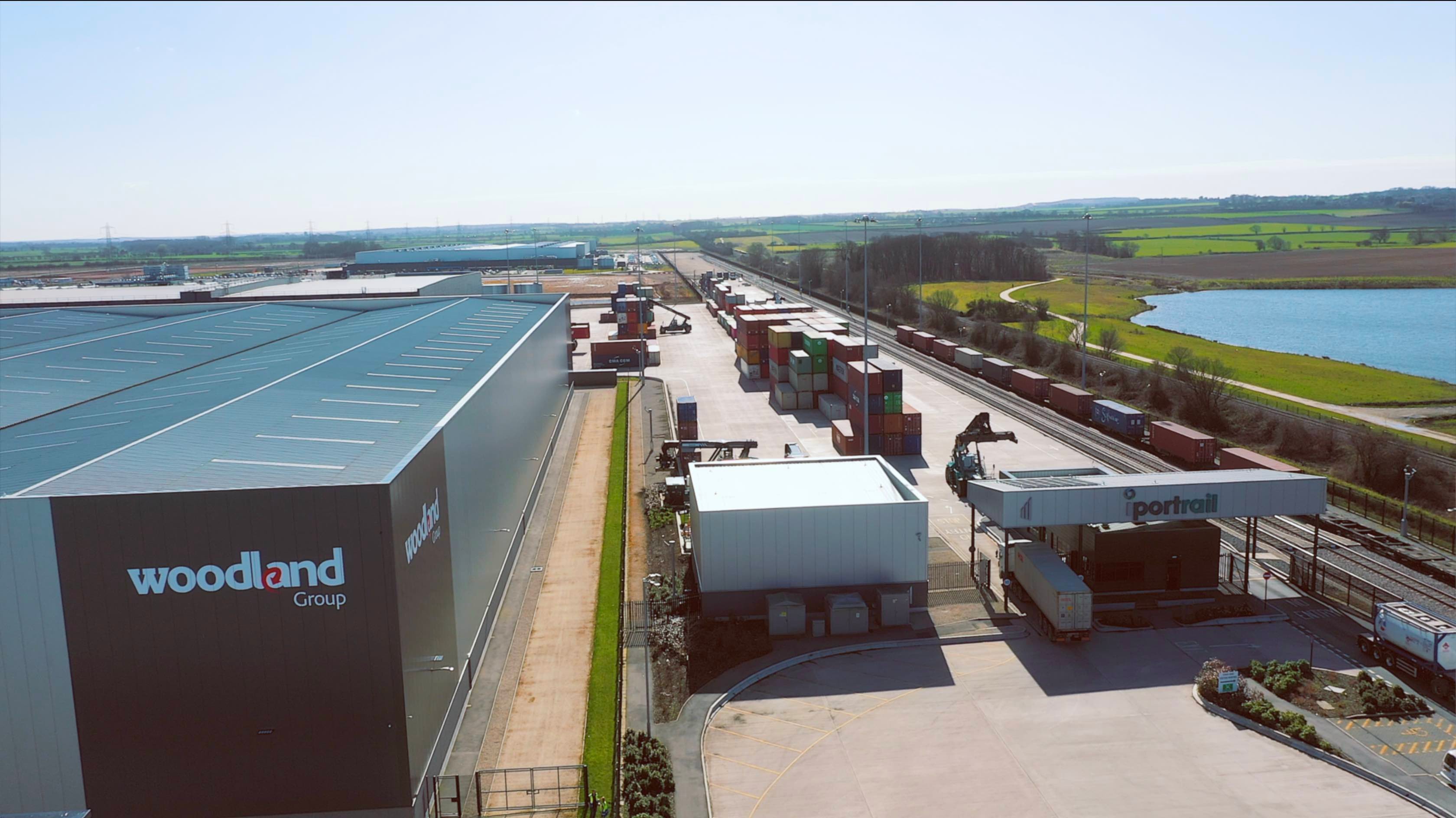
Rail networks across China connect inland production centres with international corridors serving Europe and the UK, as well as key ports to support sea-rail intermodal transport. These established routes offer stable scheduling and continued infrastructure investment, supporting industries from automotive and manufacturing to retail and consumer goods.
Woodland Group coordinates rail departures aligned with customer production cycles. By integrating inland transport, terminal operations and European final-mile distribution, we ensure rail freight from China remains fully connected to a wider supply chain strategy.

Why Choose Woodland Group for Rail Freight from China?
Woodland Group delivers more than transit capacity. We provide integrated control across your rail freight operations, ensuring visibility, reliability and commercial balance
- In-house Woodland offices in Shanghai, Ningbo and Shenzhen
- Integrated inland collection and European distribution
- In-house customs oversight at origin and destination
- Real-time shipment tracking via Woodland Online
- Dedicated account management with corridor expertise
- Balanced transit times between air and sea freight
- Transparent reporting and emissions visibility

Customs & Compliance
International rail freight from China must comply with a range of customs regulations, transit requirements and documentation standards across multiple borders.
Woodland Group provides comprehensive customs brokerage services to ensure goods move efficiently while remaining fully compliant. Our teams manage customs declarations, tariff classifications, duties and taxes, and all required documentation across origin, transit and destination points.
By maintaining accurate documentation and aligning data across the supply chain, we help minimise delays at border crossings and ensure consistent movement along the rail corridor.
Customs News & Insights
Stay informed with the latest developments in the dynamic world of customs compliance. Our team of experienced customs specialists diligently monitors regulatory, trade agreements, and industry best practices, to provide you with timely and accurate information.

Customs Compliance Checklist
This checklist provides a comprehensive guide to the essential elements of customs compliance,

Adapting to Changing Customs Regulations
Latest insight into the recent, upcoming and potential changes to customs and international trade regulations.
Tariff Classification and Duty Minimisation
Importing or exporting goods? Understanding classification is crucial for minimising costs and avoiding delays.

Guide to Customs Brokerage
Customs brokers are licensed professionals with specialized expertise in import and export procedures.
Customs News & Insights
Stay informed with the latest developments in the dynamic world of customs compliance. Our team of experienced customs specialists diligently monitors regulatory, trade agreements, and industry best practices, to provide you with timely and accurate information.
Customs Compliance Checklist
This checklist provides a comprehensive guide to the essential elements of customs compliance,
Adapting to Changing Customs Regulations
Latest insight into the recent, upcoming and potential changes to customs and international trade regulations.
Tariff Classification and Duty Minimisation
Importing or exporting goods? Understanding classification is crucial for minimising costs and avoiding delays.
Guide to Customs Brokerage
Customs brokers are licensed professionals with specialized expertise in import and export procedures.

Intermodal Integration Beyond the Rail Terminal
Rail rarely operates in isolation. Woodland Group designs rail freight solutions from China that integrate seamlessly with road, warehousing and port infrastructure. Where required, we coordinate rail-to-port movements to align with onward sea freight or distribution across the UK, Europe and the U.S.
This intermodal flexibility allows customers to adapt routing based on demand fluctuations, cost considerations or regulatory changes. Rail becomes part of a broader, resilient supply chain framework rather than a standalone transport mode.

Woodland Online: Full Visibility Across Rail Freight
Our digital platform provides real-time control across your rail freight shipments from China. Customers can access milestone tracking, documentation updates, emissions reporting and shipment status in one central dashboard.
This transparency supports planning, reporting and internal communication. Whether moving consolidated cargo or full containers, Woodland Online ensures your rail freight operations remain visible and accountable at every stage.
Ready to Move Rail Freight from China?
Contact us today to discuss your rail freight requirements and receive a tailored quotation.
What are typical rail freight transit times between China and Europe?
Transit times vary depending on origin, border crossings and final destination. On average, rail shipments between central China and Western Europe typically take between 14 and 20 days door-to-door.
Transit performance can be influenced by terminal congestion, customs processes and onward distribution planning. Working with an experienced forwarder helps ensure routing is aligned with realistic schedules.
Is rail freight more cost-effective than sea freight?
Rail freight typically sits between air and ocean pricing. Sea freight remains the most cost-effective option for large volumes with longer lead times, while rail provides faster transit at a higher but commercially balanced cost.
The right option depends on inventory strategy, time sensitivity and overall supply chain priorities.
How does rail freight consolidation (LCL) work?
Rail consolidation allows multiple shipments from different customers to be grouped into a single container. This enables businesses to move smaller volumes without committing to full container capacity.
It provides a structured, cost-efficient solution with predictable departure schedules and simplified documentation handling.
Can I track rail freight shipments in real time?
Yes. Rail freight tracking is available across major corridors, providing visibility of key milestones including terminal handling, border crossings and estimated arrival times.
Through Woodland Online, customers can access real-time updates alongside documentation and shipment data in one central platform.
Is rail freight reliable during peak shipping seasons?
Rail freight reliability during peak periods depends on corridor capacity, border processing efficiency and terminal scheduling. Demand fluctuations can impact space availability and transit times.
Working with a forwarder that manages consolidation and secured capacity planning helps maintain consistent performance during high-volume periods.
What documentation is required for rail freight shipments to Europe?
Typical documentation includes commercial invoices, packing lists, export declarations and any commodity-specific compliance requirements. Additional transit documentation may be required depending on the route.
Accurate data and consistent documentation are essential to avoid delays at border crossings.
Can rail freight handle temperature-sensitive or high-value goods?
Rail freight can support temperature-sensitive and high-value cargo where appropriate equipment and routing are used. Certain services offer temperature-controlled containers, while secure handling processes support high-value shipments.
Rail can provide a more balanced solution than air or sea depending on transit time requirements and product sensitivity.


