Contact Us
26 August 2026•Article
China Port Congestion Update: Severe Delays Across Shanghai, Ningbo and Yantian
Severe congestion continues across Shanghai, Ningbo and Yantian, with significant vessel delays, port omissions and restricted terminal access affecting China exports. Further disruption is expected at Ningbo-Zhoushan Port as terminal operations are temporarily suspended due to Typhoon Saudel.
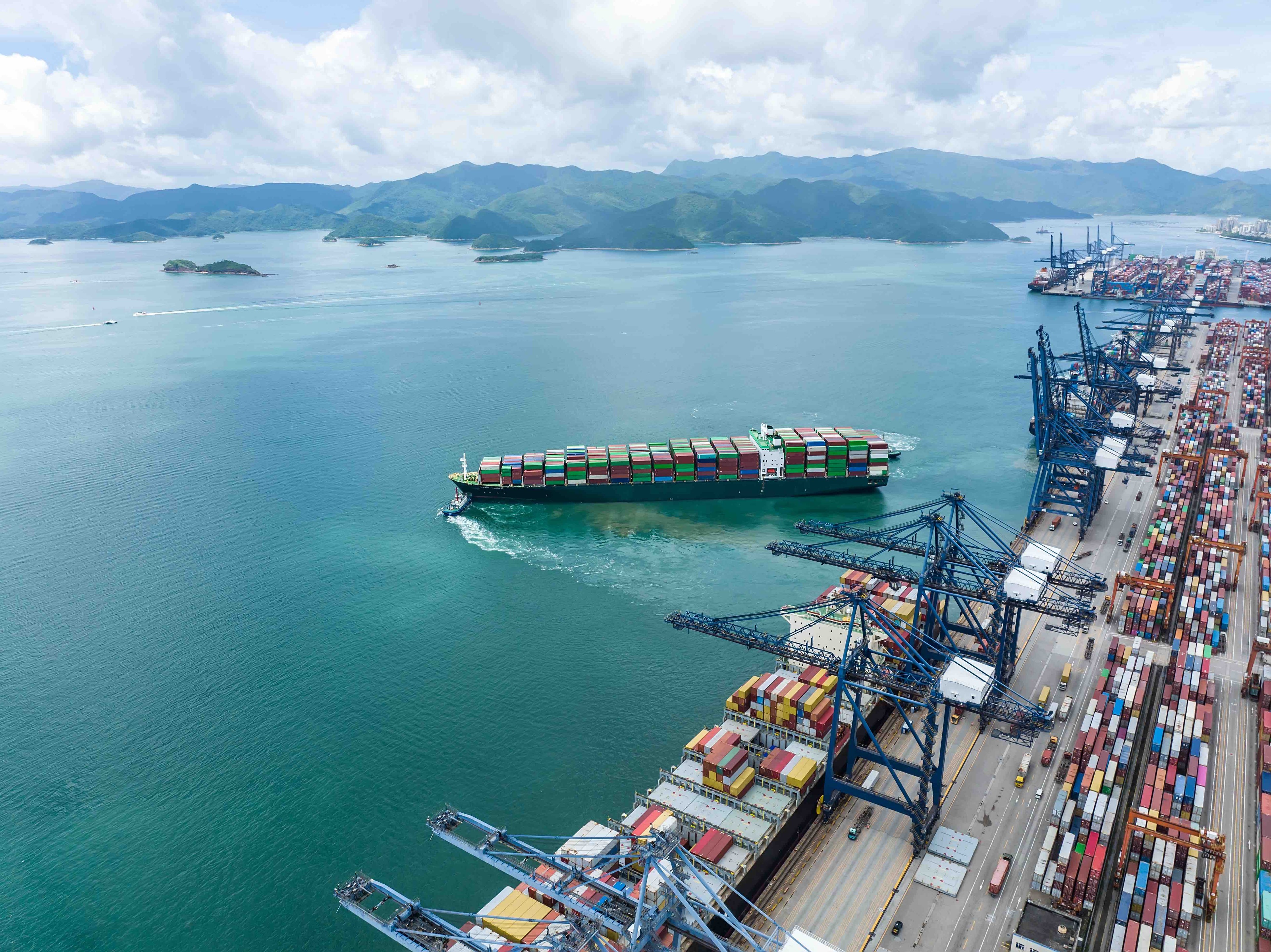
26 August update: Typhoon Saudel to suspend operations at Ningbo-Zhoushan Port
Further disruption is expected at Ningbo-Zhoushan Port today due to Typhoon Saudel and strong winds affecting the port area.
All terminals at Ningbo-Zhoushan Port are scheduled to temporarily suspend container gate-in and pick-up operations as follows:
- From 16:00 on 26 August: empty container gate-in and pick-up operations will be suspended.
- From 20:00 on 26 August: loaded container gate-in and pick-up operations will be suspended.
A timetable for operations to resume has not yet been announced.
The latest suspension comes while Ningbo is continuing to manage vessel and container backlogs following recent weather disruption, creating the potential for further delays to vessel schedules and export shipments.
Woodland Group's teams in China are monitoring the situation closely and will provide further updates as terminal operations resume. If you have cargo moving through Ningbo or are concerned about an upcoming shipment from China, please contact your Woodland Group representative to discuss the potential impact and available options.
China Port Congestion Update: Severe Delays Continue Across Shanghai, Ningbo and Yantian
25 August 2026
Severe congestion across several of China's major container ports is continuing to disrupt ocean freight operations, with significant vessel delays, port omissions, restricted terminal access and schedule changes affecting shipments from East and South China.
Following the recent typhoons, it had been expected that congestion would begin to ease as terminals reopened and vessel backlogs were cleared. However, the recovery is proving more challenging, with Shanghai, Ningbo and Yantian currently experiencing significant and interconnected disruption.
As carriers attempt to recover schedules, congestion at one port can have knock-on effects elsewhere in the network, contributing to vessel bunching, port omissions, rolled cargo and further schedule changes.
Woodland Group's teams in China are monitoring the situation closely and working with carriers to manage affected shipments.
Shanghai: significant berthing delays
Congestion at Shanghai has intensified, with substantial vessel queues continuing to affect both Yangshan and Waigaoqiao terminals.
Current reports indicate that the longest berthing delays at Yangshan have exceeded 12 days, while waiting times at Waigaoqiao are averaging approximately eight days.
Services operating on some US and Southeast Asia routes are experiencing delays of approximately 10–14 days, while high container yard utilisation is adding further pressure to terminal operations.
Carriers are responding by adjusting schedules and omitting selected port calls as they attempt to restore service reliability.
Ningbo: backlog continues following typhoon closure
Ningbo continues to experience significant congestion following the disruption caused by the recent typhoon.
An extended closure of approximately 88 hours contributed to a substantial backlog of vessels waiting to enter the port. Although operations have resumed, the rate at which the backlog is being cleared remains under pressure from continued vessel arrivals.
This is contributing to ongoing schedule disruption, vessel bunching and changes to planned port calls.
Yantian: tighter gate-in restrictions
Conditions at Yantian are also creating challenges for South China exports.
Terminal controls currently restrict heavy export containers from entering the port more than seven days ahead of the vessel's expected berthing.
Changes to cut-off times and vessel schedules mean exporters need to monitor bookings carefully, particularly where cargo is ready significantly ahead of the revised terminal receiving window.
Failure to align cargo delivery with updated gate-in requirements may result in containers remaining at warehouses or other storage locations for longer than planned.
Wider disruption across Northeast Asia
The disruption extends beyond individual terminals.
Current industry estimates indicate that more than 2.4 million TEU of vessel capacity has been affected or delayed across Northeast Asia as carriers respond to congestion and schedule disruption.
With Shanghai, Ningbo and Yantian forming important parts of many Asia shipping rotations, disruption at one location can quickly affect vessel arrivals and available capacity elsewhere.
As a result, a full return to normal operating conditions is expected to take several weeks rather than days.
What could this mean for your shipments?
Customers shipping from China may experience:
- Extended vessel waiting and transit times.
- Port omissions and changes to scheduled rotations.
- Cargo being rolled onto later sailings.
- Changes to vessel departure and arrival dates at short notice.
- Restricted terminal gate-in windows.
- Additional storage, detention or diversion costs in some circumstances.
- Continued pressure on space and equipment availability.
The extent of disruption will vary by port, carrier, service and individual shipment.
Planning ahead
Given the current conditions, customers with upcoming China exports should allow significantly more time than usual when planning shipments.
Where possible, Woodland Group teams are currently recommending that customers plan approximately 15–20 days earlier than normal for affected ocean freight movements.
Our teams in China are also:
- Checking port calls and carrier schedules before bookings are confirmed.
- Monitoring conditions across Shanghai, Ningbo and Yantian daily.
- Reviewing routings where disruption makes alternative options appropriate.
- Working to ensure shipments meet revised terminal gate-in and cut-off requirements.
- Proactively reviewing affected shipments as carrier schedules change.
Where shipments are particularly time-sensitive, alternative routings or transport modes may also be worth considering.
22 August 2026
Severe port congestion is continuing to affect major export hubs across East and South China, with vessel delays, port omissions, restricted terminal gate-in windows and equipment availability impacting ocean freight operations.
Recent typhoons have disrupted vessel schedules and terminal operations, contributing to vessel bunching and significant backlogs as ports and carriers work to restore normal operations.
Woodland Group teams in China are closely monitoring conditions across the region, particularly at Shanghai, Ningbo and Shenzhen, where customers may experience changes to vessel schedules and longer transit times.
Shanghai: vessel waiting times exceed five days
At the Port of Shanghai, average vessel waiting times have exceeded five days over the past week, with recovery efforts following recent severe weather still ongoing.
Significant vessel delays and schedule disruption continue to affect port operations. To help alleviate congestion and stabilise service networks, carriers are omitting selected Shanghai port calls, which may result in cargo being rolled onto subsequent sailings.
Although terminal gate-in and gate-out operations have resumed, additional processing times and fluctuating schedules continue to affect cargo planning and container availability.
Export gate restrictions also remain in effect, with terminals currently accepting export cargo only for vessels with an Estimated Time of Berth (ETB) within approximately two to three days.
Ningbo: congestion continues following Typhoon Dolphin
At Ningbo, average vessel waiting times have been approximately 3.5 days over the past week.
Following Typhoon Dolphin, a large number of vessels delayed their arrivals after seeking shelter. This has contributed to vessel bunching, increased congestion and subsequent port omissions as carriers work to restore schedule reliability.
Ports and terminals are continuing to process the resulting backlog of vessels, containers and truck traffic.
Export gate restrictions remain in place, with export cargo currently accepted for vessels with an ETB within approximately three days.
Shenzhen: delays at Yantian and Shekou
Congestion is also affecting the key South China ports of Yantian and Shekou, where average vessel waiting times have been approximately four days over the past week.
Current waiting times are reported at approximately four to five days, with further pressure possible as vessels delayed at Shanghai and Ningbo progress through carrier networks and arrive in South China.
Export gate restrictions currently allow cargo to be delivered for vessels with an ETB within approximately seven days.
What could this mean for your shipments?
As carriers and terminals respond to the congestion, customers shipping from affected ports may experience:
- Extended transit times as vessels wait longer to berth and complete cargo operations.
- Port omissions where scheduled calls are skipped to help carriers recover vessel schedules.
- Rolled cargo where containers are moved to subsequent sailings.
- Changes to port rotations as vessels are redirected or schedules adjusted.
- Restricted terminal gate-in windows, affecting when export containers can be delivered.
- Equipment availability challenges as disrupted schedules affect normal container flows.
The extent of disruption will vary by port, carrier, service and individual shipment.
Planning ahead
Customers with cargo moving through affected ports are encouraged to book as early as possible and allow additional lead time within their supply chain planning.
Where shipments are particularly time-sensitive, alternative routings or transport modes may also be worth considering.
Woodland Group's ocean freight teams are monitoring port conditions, carrier schedules, space and equipment availability and will continue to support customers with affected shipments.
You may also like:
New customs requirements on Ireland to Great Britain movements from 2024

US Government Shutdown - Supply Chain Impact


