Contact Us

In 2025, itsu [grocery] and Woodland Group partnered to reduce the carbon impact of freight moving between Spain and the UK. By transitioning a key lane from traditional road-only transport to a short sea shipping model, the two organisations delivered a significant reduction in transport emissions while maintaining the service reliability required by the food and beverage sector and taking into account cost efficiencies.
This initiative demonstrates how targeted modal shift, supported by data-led decision-making and close collaboration, can deliver immediate and measurable environmental benefits.
The Challenge: Reducing Freight Emissions Without Compromising Service
Woodland Group demonstrates its commitment to supply chain sustainability through pioneering multimodal shift from road to short sea to reduce emissions, in collaboration with itsu [grocery], which brings the much-loved itsu [grocery] brand to health food shops & supermarkets nationwide inthe UK.
itsu [grocery] brings Asian-inspired, restaurant quality food for a healthy lifestyle to retailers, guided by a mission to “eat beautiful.” itsu [grocery] has made significant strides in sustainability, which can be seen on their website.
To support their No Planet B goals, itsu [grocery] collaborated with Woodland Group, a logistics leader dedicated to providing data-driven, low-carbon supply chain solutions. Together, the two companies work to ensure that itsu [grocery]’s growth is decoupled from its environmental impact.
The Approach: A Strategic Modal Shift
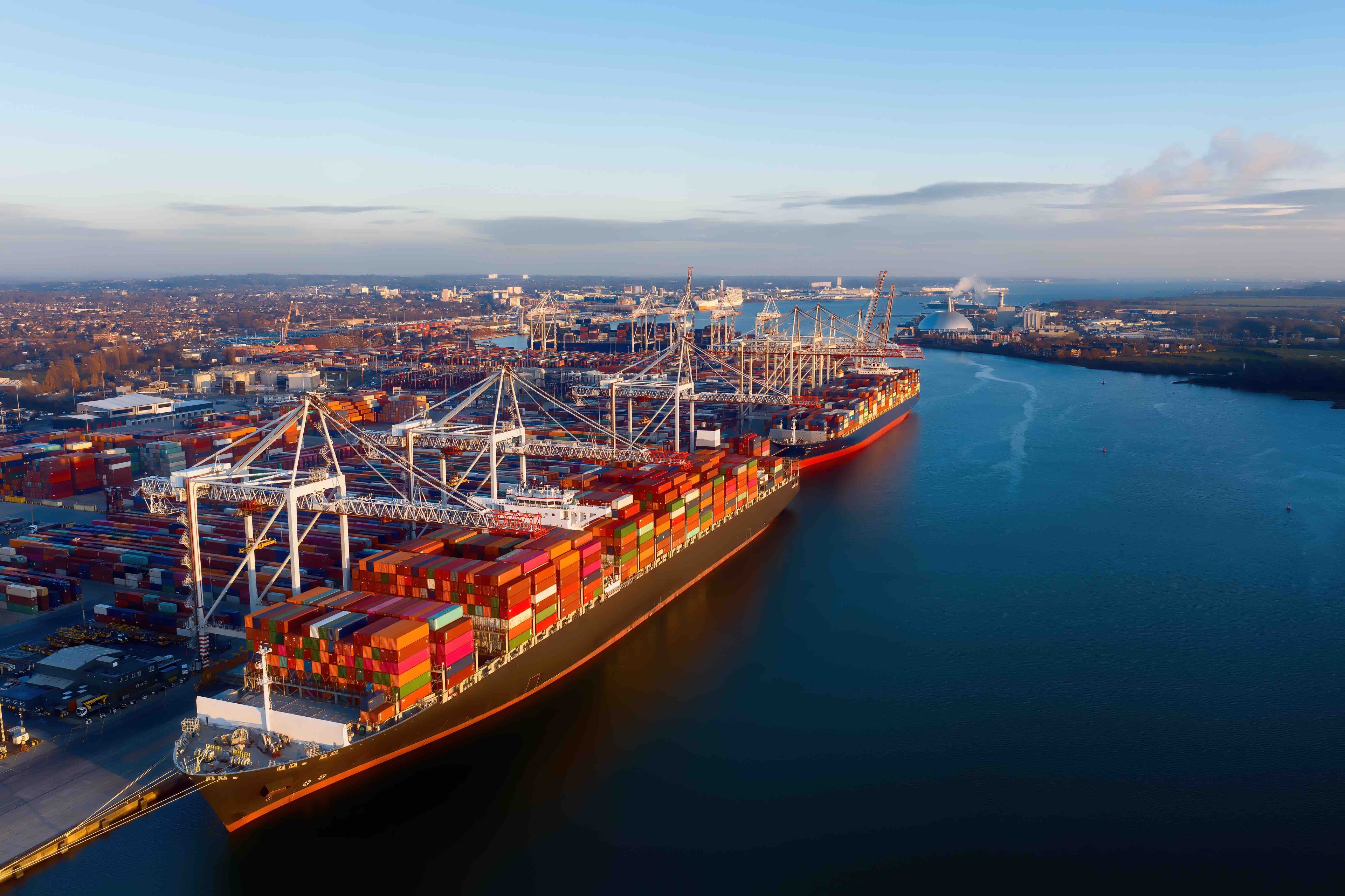
A primary focus of this partnership has been the decarbonisation of freight moving from Spain to the UK. Traditionally, this route relies heavily on road freight, which is carbon-intensive. As a result, Woodland Group transitioned itsu [grocery]’s freight from standard road transport to a Short Sea shipping model. By utilising maritime routes for the longest leg of the journey, the partnership has drastically reduced the reliance on heavy goods vehicles (HGVs).
The Impact: Measurable Emissions Reduction
Woodland Group compared the emissions of a traditional road-only model against the actual short sea solution implemented for itsu [grocery] in 2025.
The shift to short sea freight has delivered immediate and measurable environmental benefits. This move represents a 56% saving in emissions for the route, proving that strategic modal shifts can halve the environmental cost of long-haul logistics. The annual savings achieved in 2025 are equivalent to nearly 15 UK citizens' annual emissions (based on WWF Footprint Calculator).
Alternatively, if we took the total greenhouse gases saved in cubic metres, it would be enough to fill 4.8 Big Bens per year (66,164 cubic metres).
Scaling the Opportunity: Innovation and Alternative Fuels
The success of the Spain-to-UK route serves as a blueprint from both organisations and a wider commitment to continuous improvement through exploration of the next generation of logistics technology.
Future joint efforts will focus on:
- Alternative Fuel Exploration: Investigating the use of biofuel and/or electric heavy-duty vehicles for unavoidable road freight, either directly, or via a Book & Claim model.
- Data Integration: Utilising Woodland’s carbon reporting tools to identify further modal shift opportunities across Europe and Asia.
- Circular Logistics: Finding ways to further reduce waste within the distribution network to align with itsu [grocery]’s 2045 Net Zero roadmap.
Through this collaboration, itsu [grocery] and Woodland Group continue to demonstrate that sustainable business practices and efficient global logistics are not only compatible but mutually reinforcing.
Ian Russell, Manager of Woodland’s Food and Beverage Division, had this to say about the partnership:
"This collaboration with itsu [grocery] has been built on the strength of two like minded teams working with a shared belief that meaningful sustainability progress comes from looking deeply into the supply chain, understanding its pressures, and finding solutions that reduce emissions without disrupting service. That approach allowed us to identify a lane where a modal shift could have real impact while maintaining the fast, reliable flow of goods that the food and beverage sector demands.”
“For both Woodland and itsu [grocery], this project reflects a genuine commitment to exploring every opportunity that supports the journey to net zero. Delivering a 56% emissions reduction through this initiative shows what can be achieved when sustainability is integrated into everyday logistics decisions rather than treated as an afterthought. We will continue working closely together to uncover further innovations for itsu [grocery] and for the wider portfolio of F&B clients we support.”
Rebecca Allen, Senior Sustainability Advisor at itsu [grocery], said:
"Working with Woodland has been imperative for itsu [grocery] to make carbon reductions in our supply chain. At itsu [grocery] we are committed to sustainability and working closely with our suppliers to achieve our long-term ESG goals, one of which is becoming a Net 0 business by 2045. In our journey to reach this goal, we calculate our Scope 1, 2 and 3 emissions annually, which Woodland have been excellent at providing accurate freight data regularly, as well as offering support and advice with the freight category of our scope 3 which has been so valuable to us. We are looking forward to continuing to work in collaboration with Woodland to make more steps towards a sustainable future.”

Could your supply chain benefit from a smarter modal mix?
From modal shift and alternative fuels to carbon reporting and route optimisation, our teams can help identify practical opportunities to reduce supply chain emissions while balancing cost and service requirements.
You may also like:
New customs requirements on Ireland to Great Britain movements from 2024

US Government Shutdown - Supply Chain Impact


